Welcome to Aaroham Chest & Allergy Center, under the expert care of Dr. D.C. Gupta (Chest Specialist & Allergy Specialist). Our consultation hours are from 05:30 PM to 08:00 PM.
Welcome to Aaroham Chest & Allergy Center, under the expert care of Dr. D.C. Gupta (Chest Specialist & Allergy Specialist). Our consultation hours are from 05:30 PM to 08:00 PM.

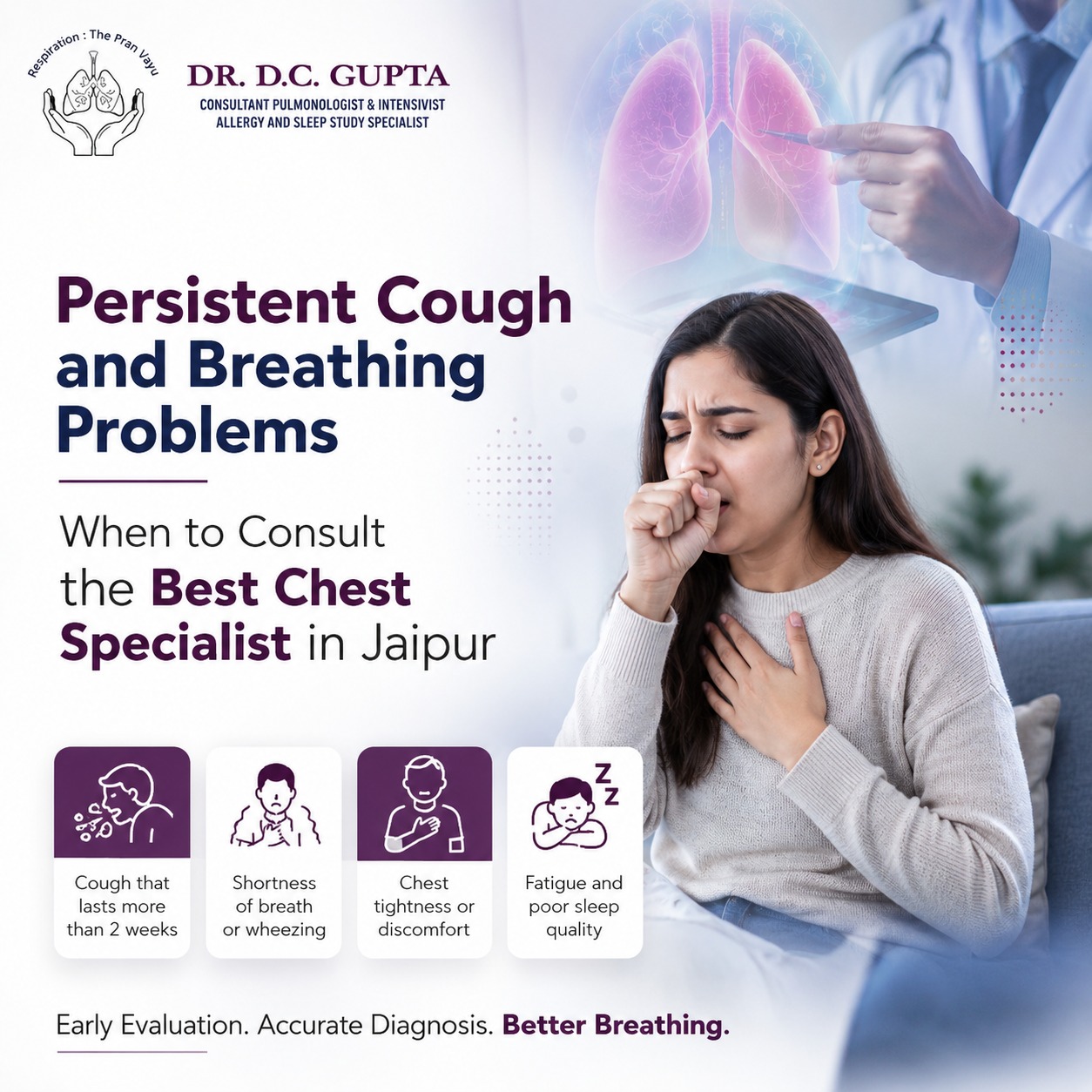
A cough that lasts for a few days is often associated with a common cold or temporary respiratory infection. However, when a cough continues for several weeks, keeps returning, or occurs along with breathlessness, wheezing or chest discomfort, it may need professional evaluation. Persistent respiratory symptoms can sometimes indicate an underlying condition affecting the lungs or airways.
Consulting the Best Chest Specialist in Jaipur can help identify the possible cause of ongoing cough and breathing difficulties and determine whether further testing or specialist treatment is required. A pulmonologist, also known as a chest physician or respiratory specialist, evaluates conditions affecting the lungs, airways and respiratory system.
A chest specialist diagnoses and manages a wide range of respiratory conditions. If you are looking for the Best Chest Specialist in Jaipur, it is important to consult a doctor who can evaluate conditions such as asthma, chronic obstructive pulmonary disease (COPD), recurrent respiratory infections, sleep-related breathing disorders, pleural diseases and other lung conditions.
During an evaluation, the doctor may consider your symptoms, medical history, lifestyle, smoking or environmental exposure, previous infections and other relevant factors. Depending on the symptoms, investigations such as pulmonary function tests, chest imaging, sleep studies or other diagnostic procedures may be recommended.
The goal is not simply to treat a cough but to understand why the cough or breathing problem is occurring.
Not every cough requires a specialist consultation. However, persistent or recurring symptoms should not be ignored, especially when they interfere with normal activities or sleep.
It’s worth getting a lingering cough checked out. There could be any number of reasons behind a cough that persists, such as asthma, allergic reactions, respiratory illnesses, gastroesophageal reflux disease, COPD and other lung diseases.
In cases where a person’s cough persists for weeks on end or recurs, worsens, or is accompanied by other respiratory complaints, a doctor’s assessment will help to identify the cause.
Breathlessness is a condition that can result from vigorous physical exercise, but unexpected or persistent breathlessness requires further evaluation. Others may experience breathlessness while walking, climbing stairs, exercising or even during normal activities.
Chronic breathlessness may indicate underlying conditions like asthma, COPD, respiratory infection, among others. The best person to evaluate breathlessness is a chest doctor who will make an assessment and advise on any further investigations where necessary.
Wheezing refers to the whistling sounds heard during breathing. It usually results from constricted air passages and is common among people who suffer from asthma and other breathing ailments.
If the condition recurs, especially when the person is asleep, exercising, and after being exposed to smoke, dust, or other stimuli, it would be wise to seek professional opinion.
Frequent occurrences of bronchitis or any other respiratory infection will need further diagnosis especially when there is a delay in recovery or re-occurrence of symptoms.
A pulmonologist can analyze the patient’s history of the infections and ascertain if there is any underlying disease in the respiratory system causing the issue.
Asthma could manifest itself through symptoms like wheezing, coughing, chest tightness, and difficulty in breathing. COPD could result in persistent coughing, excessive mucus secretion, and difficult breathing.
Both these illnesses could differ a lot from one patient to another. Proper diagnosis and treatment are crucial for effective control of the symptoms and improved respiratory health.
Those who want to visit a Pulmonologist in Jaipur should seek the services of a competent respiratory physician for their symptoms.
Tuberculosis is commonly associated with the lungs, but it can also affect organs and tissues outside the lungs. This form is known as Extra Pulmonary Tuberculosis (EPTB).
This is an important message highlighted in the World TB Day awareness video featuring Dr. D.C. Gupta. The video focuses on Extra Pulmonary TB and helps create awareness that tuberculosis should not always be considered only a pulmonary disease.
Extra Pulmonary TB may involve areas such as lymph nodes, pleura, bones and joints, the abdomen, the nervous system or other organs. The symptoms can therefore vary considerably depending on the site affected.
A person may experience persistent fever, unexplained weight loss, fatigue or reduced appetite, while other symptoms may be specific to the affected organ. For example, lymph-node TB can present with swelling, while involvement of bones or joints may cause pain or swelling.
These symptoms can also occur with many other medical conditions. Therefore, they should not be used for self-diagnosis.
Because EPTB can occur outside the lungs, its symptoms may not always look like typical respiratory symptoms. Diagnosis may require clinical assessment along with investigations directed at the suspected site of disease.
India's Central Tuberculosis Division provides specific guidance and training resources for Extra Pulmonary TB, while diagnostic approaches may include testing of appropriate samples from the affected site and other investigations based on clinical findings.
The important takeaway is that persistent or unexplained symptoms should receive appropriate medical attention rather than being ignored.
Pulmonary specialists can assess many types of breathing problems and chest diseases, which include asthma, COPD, chronic coughing, respiratory infections, breathing problems during sleep, pleural disease, and other lung diseases.
It is also applicable in cases of patients with possible tuberculosis, including cases wherein the patient presents signs and symptoms of respiratory illness suggestive of TB.
The type of investigation that the specialist will employ depends on the particular patient case.
Consultation normally starts with an elaborate discussion on your symptoms.
The doctor will inquire when you start coughing or experiencing breathing problems, whether there is anything that triggers the symptoms, like certain activities, certain times of the day, dust, smoke, or exercise.
Your medical history, respiratory infection, allergies, medication, and other lifestyle factors might be evaluated as well.
Following the results of clinical evaluation, the doctor can suggest appropriate investigations. You do not need to have the same tests, so the diagnostic process will depend on your symptoms.
Yes. Allergens such as dust, pollen, mould, pet dander and other environmental triggers can cause or worsen respiratory symptoms in susceptible individuals.
Allergy-related problems may result in sneezing, nasal symptoms, throat irritation, coughing or worsening of asthma symptoms. Identifying potential triggers can therefore be an important part of respiratory care.
People experiencing recurring allergy-related respiratory symptoms may consider consulting the Best Allergy Specialist in Jaipur for appropriate clinical evaluation. Allergy testing, when clinically indicated, may help identify relevant allergens, but test results should always be interpreted in the context of the patient's symptoms and medical history.
Dr. D.C. Gupta is a chest and allergy specialist who provides evaluation and management for a range of respiratory and allergy-related conditions.
His clinical practice covers concerns such as asthma, COPD, persistent cough, respiratory infections, allergy-related respiratory symptoms, pleural conditions and other pulmonary disorders.
Patients experiencing ongoing cough, unexplained breathing difficulty, recurring wheezing or other persistent respiratory symptoms can discuss their concerns with a qualified specialist to understand whether further evaluation is appropriate.
A persistent cough, recurring wheezing or unexplained breathing difficulty should not always be dismissed as a temporary problem. Respiratory symptoms can occur because of asthma, COPD, allergies, infections and other lung conditions, while tuberculosis can also present in forms that affect areas outside the lungs.
The awareness message about Extra Pulmonary TB shared by Dr. D.C. Gupta is a reminder that understanding respiratory and TB-related symptoms is important for timely medical evaluation.
If you are experiencing persistent cough, breathing difficulty, recurrent chest infections, wheezing or allergy-related respiratory symptoms, consult a qualified chest physician or pulmonologist for appropriate evaluation.
For patients looking for the Best Chest Specialist in Jaipur or specialist care for respiratory and allergy-related concerns, Dr. D.C. Gupta can evaluate individual symptoms and guide appropriate investigations and management.
If a cough continues for several weeks, keeps returning, becomes worse, or is accompanied by breathlessness, wheezing, chest discomfort or other concerning symptoms, it is advisable to consult a qualified chest specialist for evaluation.
Yes. Allergies can trigger coughing, throat irritation, nasal symptoms and breathing difficulties in susceptible individuals. An allergy evaluation may help identify potential triggers and guide appropriate management.
A pulmonologist or chest physician diagnoses and manages conditions affecting the lungs and respiratory system, including asthma, COPD, chronic cough, respiratory infections, sleep-related breathing disorders and various lung and pleural diseases.
Breathing difficulties that are persistent, recurrent, unexplained or affecting daily activities should be medically evaluated. Symptoms such as recurring wheezing, breathlessness during routine activities or repeated respiratory infections may warrant consultation with a pulmonologist.
Yes. Asthma can cause symptoms such as coughing, wheezing, chest tightness and shortness of breath. Symptoms may vary between individuals and can sometimes be triggered by exercise, allergens, infections or environmental factors.
Severe or rapidly worsening breathlessness, significant chest pain, bluish lips or face, confusion, fainting or coughing up a significant amount of blood requires urgent medical attention.
Depending on the symptoms and clinical findings, a doctor may recommend tests such as pulmonary function testing, chest imaging, allergy evaluation, sleep studies or other investigations. The appropriate tests depend on the individual's condition.
If recurring cough, wheezing or breathing symptoms appear to be associated with environmental or other allergens, consulting a qualified allergy and respiratory specialist can help evaluate the symptoms and determine whether allergy testing or other assessment is appropriate.
Repeated respiratory infections, particularly when they are frequent, severe or slow to resolve, may sometimes require further evaluation. A chest specialist can review the patient's history and determine whether additional investigation is appropriate.
Persistent respiratory symptoms can have several possible causes, ranging from allergies and asthma to infections, COPD and other lung conditions. Timely medical evaluation can help identify the underlying cause and support appropriate treatment.