Welcome to Aaroham Chest & Allergy Center, under the expert care of Dr. D.C. Gupta (Chest Specialist & Allergy Specialist). Our consultation hours are from 05:30 PM to 08:00 PM.
Welcome to Aaroham Chest & Allergy Center, under the expert care of Dr. D.C. Gupta (Chest Specialist & Allergy Specialist). Our consultation hours are from 05:30 PM to 08:00 PM.

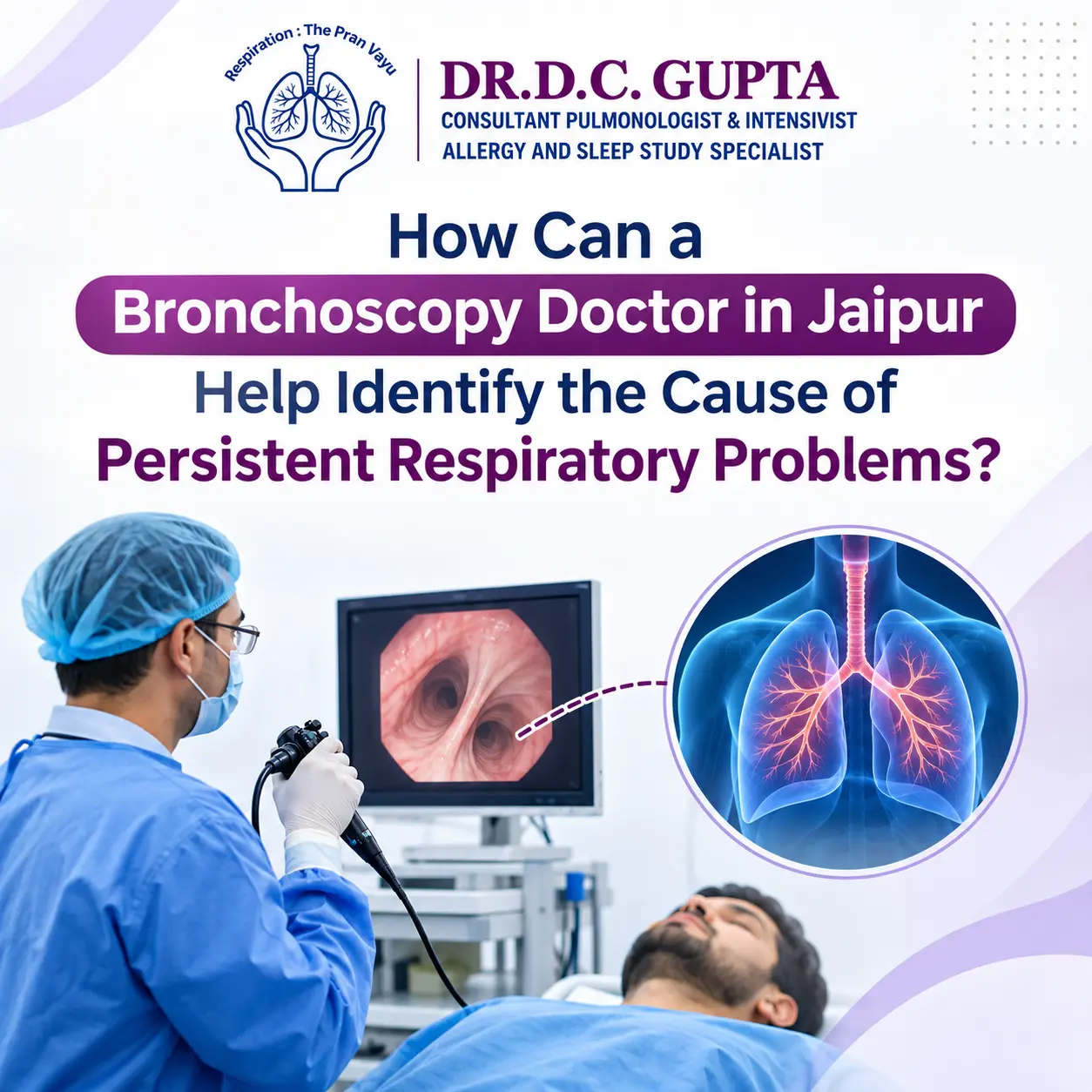
Symptoms such as persistent cough, chest infection or difficulty in breathing can become a part of your day-to-day living and shouldn’t be overlooked. It is suggested that a visit to an experienced Bronchoscopy doctor in Jaipur will enable you to find out the reason for such problems by means of respiratory assessment.
Bronchoscopy is a test that helps doctors diagnose and take samples from the air passages.
Dr DC Gupta offers consultation in respiratory medicine and bronchoscopy evaluation in Jaipur. Knowing when you need to undergo bronchoscopy, how it is done, and what to expect can help you make wise decisions regarding your respiratory system.
The respiratory issues may arise because of a number of factors that affect the lungs and air passages. When one suffers from continuous coughing, recurrent chest infection, or difficulty in breathing, there might be an underlying health problem that needs diagnosis. It is important to consult an expert Bronchoscopy doctor in Jaipur to determine the cause of your symptoms.
The causes could be chronic respiratory infections, airway inflammation, narrowing of the air passages, lung problems and possible tumors. For some patients, atypical chest X-rays or CT scans may need further diagnostic workup.
Not paying attention to the recurrence of the symptoms will lead to late diagnosis of the disease. Thus, it is vital to see a specialist for your breathing problem.
Bronchoscopy is a test that involves looking at the insides of the windpipe and bronchial tubes using an instrument called a bronchoscope. This test is done using a special equipment that has a camera as well as light to have a look at the airway.
In bronchoscopy, the scope is inserted into the body via the nose or mouth. During the test, if necessary, the doctor takes a sample of the mucus, fluid and tissue for lab tests.
The purpose of bronchoscopy is to diagnose abnormalities in the airway, infection, cause of unknown respiratory bleeding etc. Different tests are done depending on the symptoms and investigations.
Not every respiratory problem requires bronchoscopy. However, a specialist may recommend further evaluation when symptoms persist or initial investigations indicate an abnormality.
You should consider consulting a Bronchoscopy doctor in Jaipur if you experience:
A respiratory specialist can assess these symptoms and determine whether bronchoscopy or another diagnostic investigation is appropriate.
This particular Bronchoscopy test performed in Jaipur enables the doctors to look inside the air passage rather than basing their assessment on symptoms alone or the reports from the images of the lungs.
For instance, if a patient is repeatedly having infections in their lungs, the doctor may take respiratory samples to determine the exact causative agents for these infections. In a similar way, in case of any growth in the airways seen through image reports, the bronchoscopy test is performed to have a closer look at the area.
The tests and the reports from such tests help in making further assessment decisions for treatment.
The type of bronchoscopy varies depending on the health condition of the patient and the objective of the test.
A flexible bronchoscopy is done using a long, bendable tube that is connected to a camera, which will be used in examining the airways. Flexible bronchoscopy is widely applied in diagnosing a continuous cough, lung infection, airway problems and unexplained respiratory symptoms.
Rigid bronchoscopy utilizes a straight and rigid instrument and usually takes place under general anesthesia. It can be recommended in selective cases where there is airway obstruction or removal of a foreign body in the airways.
The combination of bronchoscopy and ultrasound techniques is called Endobronchial Ultrasound, or EBUS. This technique helps physicians examine lymph nodes and other structures that are situated around the airways. The sample collection may be performed using EBUS.
Navigational bronchoscopy involves the use of imaging and navigational technology to help physicians reach certain areas within the lungs. This type of bronchoscopy may be useful for looking into certain lung lesions that are difficult to locate through regular bronchoscopy.
Prior to the test, the physician evaluates the patient’s past medical history as well as reports from previous investigations. Special pre-test instructions are provided to patients related to preparation, fasting and taking medication.
For the purposes of bronchoscopy, the physician can provide local anaesthesia and sedation for greater comfort during the procedure. The physician carefully inserts the bronchoscope via the nose or mouth to study the airways. The specimen can be taken if needed for further investigation.
Patients are monitored after the test until discharge is deemed appropriate by the medical staff. Total time required for the procedure depends on the particular type of bronchoscopy.
Preparation contributes to the safety and comfort of the procedure. Prior to a bronchoscopy examination, the patient must inform the physician of all currently taken drugs, allergies and preexisting illnesses.
Special preparation guidelines may be given by the medical personnel; for example, a patient may need to fast and take special precautions regarding medication, especially anticoagulants.
If a patient requires sedation, he/she must arrange transportation after the procedure. It is crucial not to change prescribed treatment on one's own initiative.
A bronchoscopy is a routine diagnostic test; however, there are some side effects that can be experienced by the patient. These include a cough, throat irritation, or hoarseness for a short period after the test. Bleeding can be observed in some cases, especially in cases where biopsy is done.
Other uncommon side effects include infection, low oxygen, or a collapsed lung. The patient's health condition is assessed before the doctor recommends this test.
Post-procedure monitoring is conducted until the effects of anaesthesia or sedation subside. Slight coughing, soreness of throat or temporary hoarseness of voice could happen but will get better with time.
It is advisable for patients to wait until the effects of numbing have disappeared from the throat before having food or fluids. In case sedation was given, they are supposed to follow the medical team's directions on driving and other activities.
When specimens or biopsies are obtained, laboratory results could take several days or more to come out. Follow-up appointment helps the doctor to review the findings and decide further course of action.
DC Gupta, M.D. is a specialist physician in respiratory diseases who is affiliated to Aaroham Chest and Allergy Centre at Jaipur.
The qualifications of this specialist as detailed in his official site include MBBS, MD in Respiratory Medicine, FCCS-USA and PCHM-IIM.
This physician provides consultation for various respiratory diseases like chest diseases, allergic conditions and breathing problems during sleep and other critical care facilities in his respiratory diseases consultancy services.
There are also bronchoscopy related services on the official page and these include flexible bronchoscopy, rigid bronchoscopy, endobronchial ultrasound (EBUS), navigational bronchoscopy and autofluorescence bronchoscopy.
People having respiratory issues can visit Dr. DC Gupta for proper consultation and information about suitable diagnostic tests according to their condition.
Respiratory symptoms that persist cannot be taken lightly, particularly those that do not get better even after treatment initially. Determining the cause of the condition is one way to seek proper treatment.
For those seeking a Bronchoscopy doctor in Jaipur, Dr DC Gupta offers respiratory medicine services and bronchoscopy diagnostic evaluation at Aaroham Chest & Allergy Center.
Those seeking a Bronchoscopy test in Jaipur may visit the doctor to learn more about the test and available diagnostic options.
A. Bronchoscopy may be recommended when patients experience persistent coughing, repeated lung infections, unexplained respiratory bleeding or abnormal findings on chest imaging. It helps doctors examine the airways and collect samples when necessary.
A. The procedure is generally performed using local anaesthesia and, when appropriate, sedation. Patients may experience temporary discomfort, coughing or mild throat irritation.
A. A typical bronchoscopy may take approximately 30–90 minutes, depending on the type of procedure and whether additional samples are collected.
A. Yes. Doctors can collect mucus or fluid samples from the respiratory tract for laboratory testing to investigate certain bacterial, fungal and other infections.
A. Bronchoscopy can help investigate suspected lung cancer by examining suspicious areas and collecting tissue samples for biopsy. A confirmed diagnosis requires appropriate laboratory examination.
A. Patients should follow fasting instructions, inform the doctor about their medications and disclose any allergies or existing medical conditions before the procedure.
A. Many patients recover within a few hours, although mild coughing or throat irritation may continue for a day or longer. Recovery depends on the procedure performed and the patient's condition.
A. You should consult a respiratory specialist if you experience persistent coughing, repeated chest infections, coughing up blood or unexplained breathing difficulties.
How Can a Bronchoscopy doctor in Jaipur Help Identify the Cause of Persistent Respiratory Problems? A Complete Guide to Allergy Testing and Treatment with the Best Allergy Doctor in Jaipur
 How to Choose the Best Pulmonologist in Jaipur for Lung and Respiratory Care
 Understanding Asthma COPD and Lung Health with the Best Pulmonologist in Jaipur
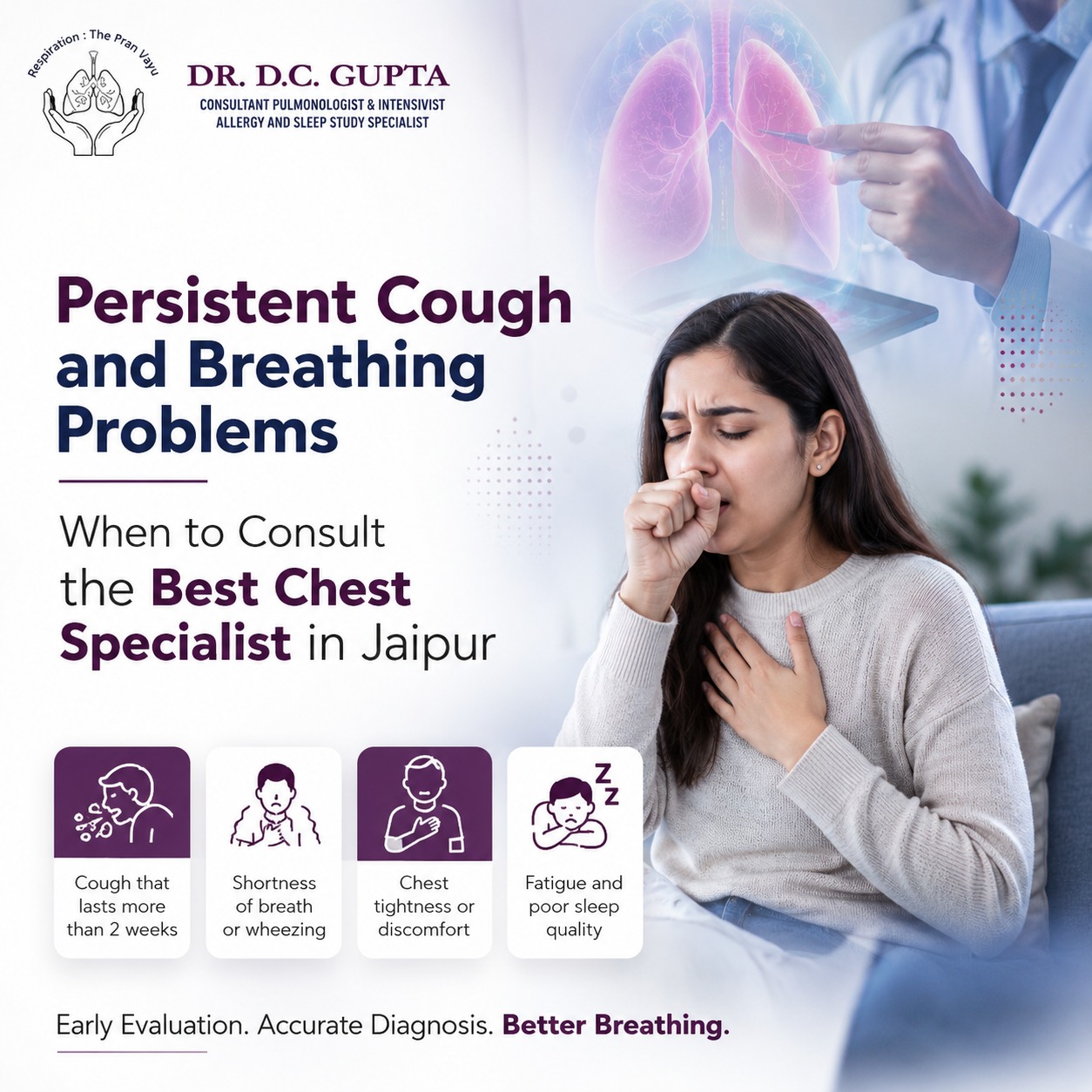 Persistent Cough and Breathing Problems When to Consult the Best Chest Specialist in Jaipur
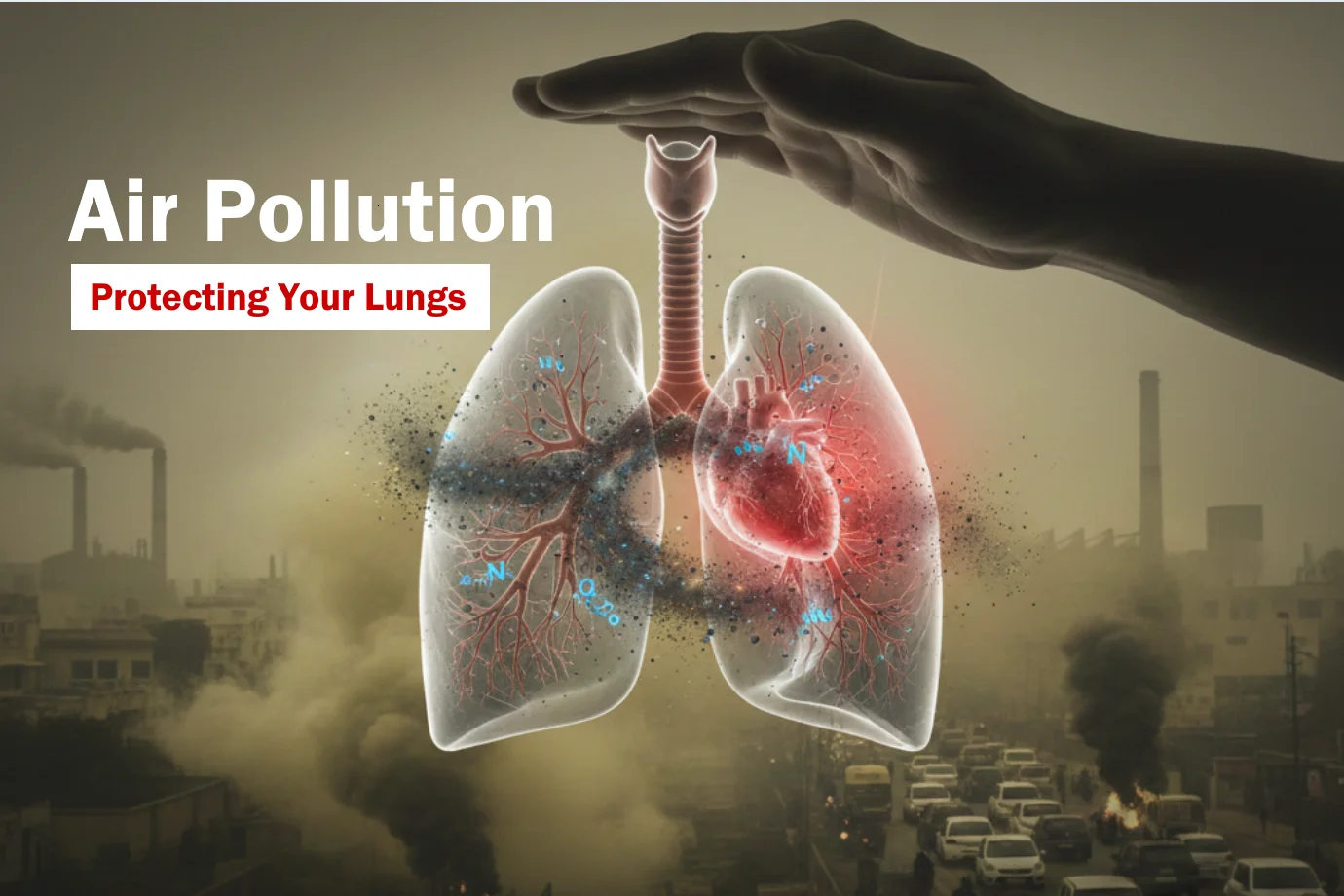 How Air Pollution is Quietly Fueling Pulmonary Hypertension
 Chest Physician & Allergy Specialist in Jaipur – Dr. D.C. Gupta